Stage Development: Snowy Field
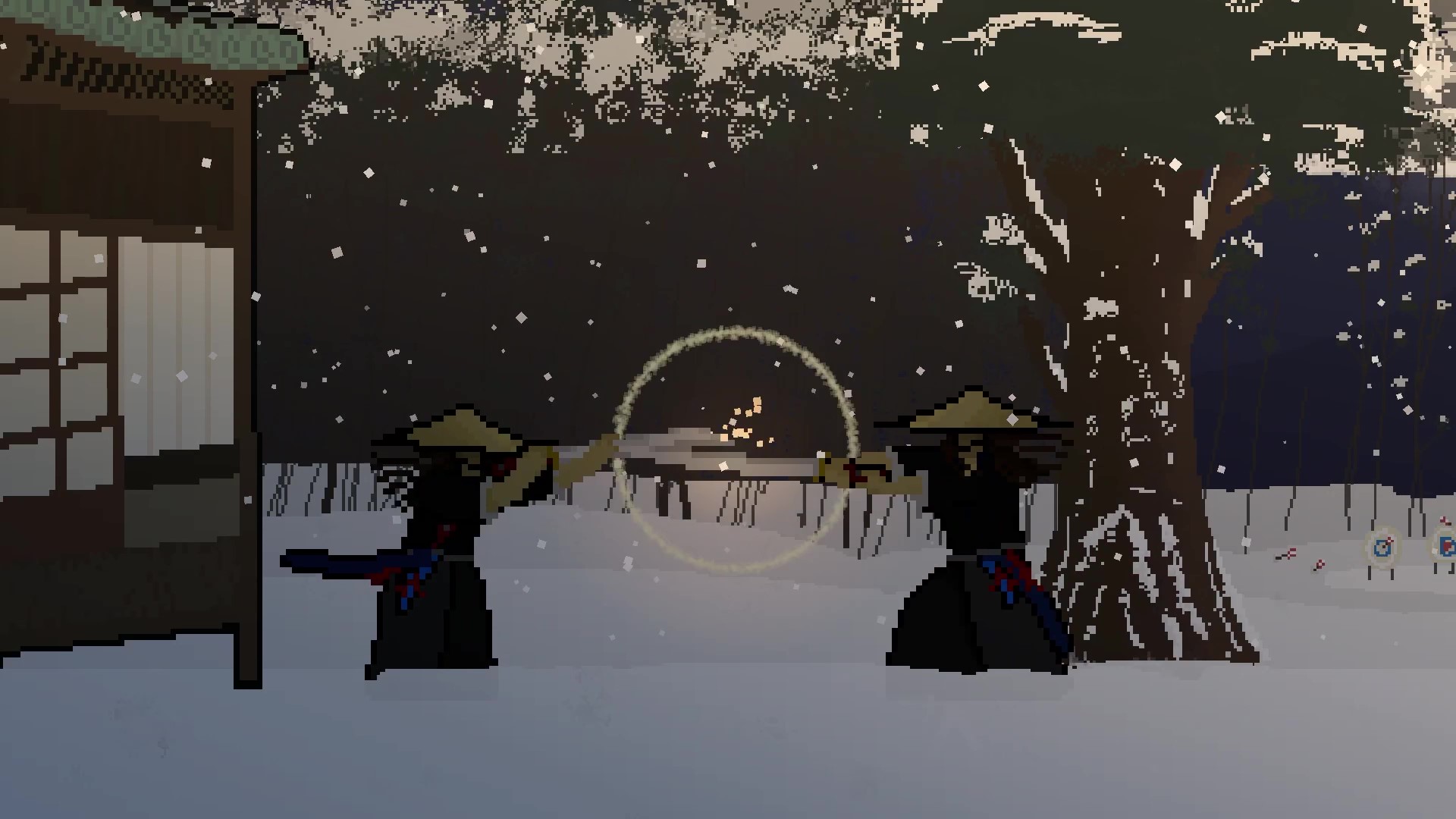
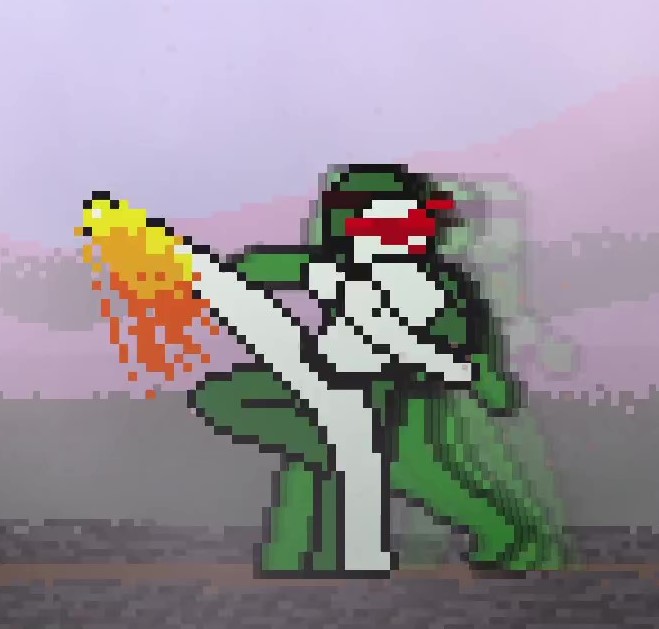
The Snowy Field is a love letter to Eiji Yoshikawa’s novel, Musashi. It is specifically based on the iconic battle against the Yoshioka martial arts school.
Visual Evolution
- The Parallax Effect: This stage utilizes multiple layers of background (forest, Japanese-style house, fencing dummies) that move at different speeds to create a sense of 3D depth.
- Particle Systems: Using Godot’s particle systems, we implemented falling snow that is also split into parallax layers, making the environment feel cold and alive.
- The Redesign: Originally a small canvas, the stage was enlarged and the “random hut” was replaced with swords thrust into snowy hills, signifying a forgotten battlefield.
Stage Development: Ganryu Island
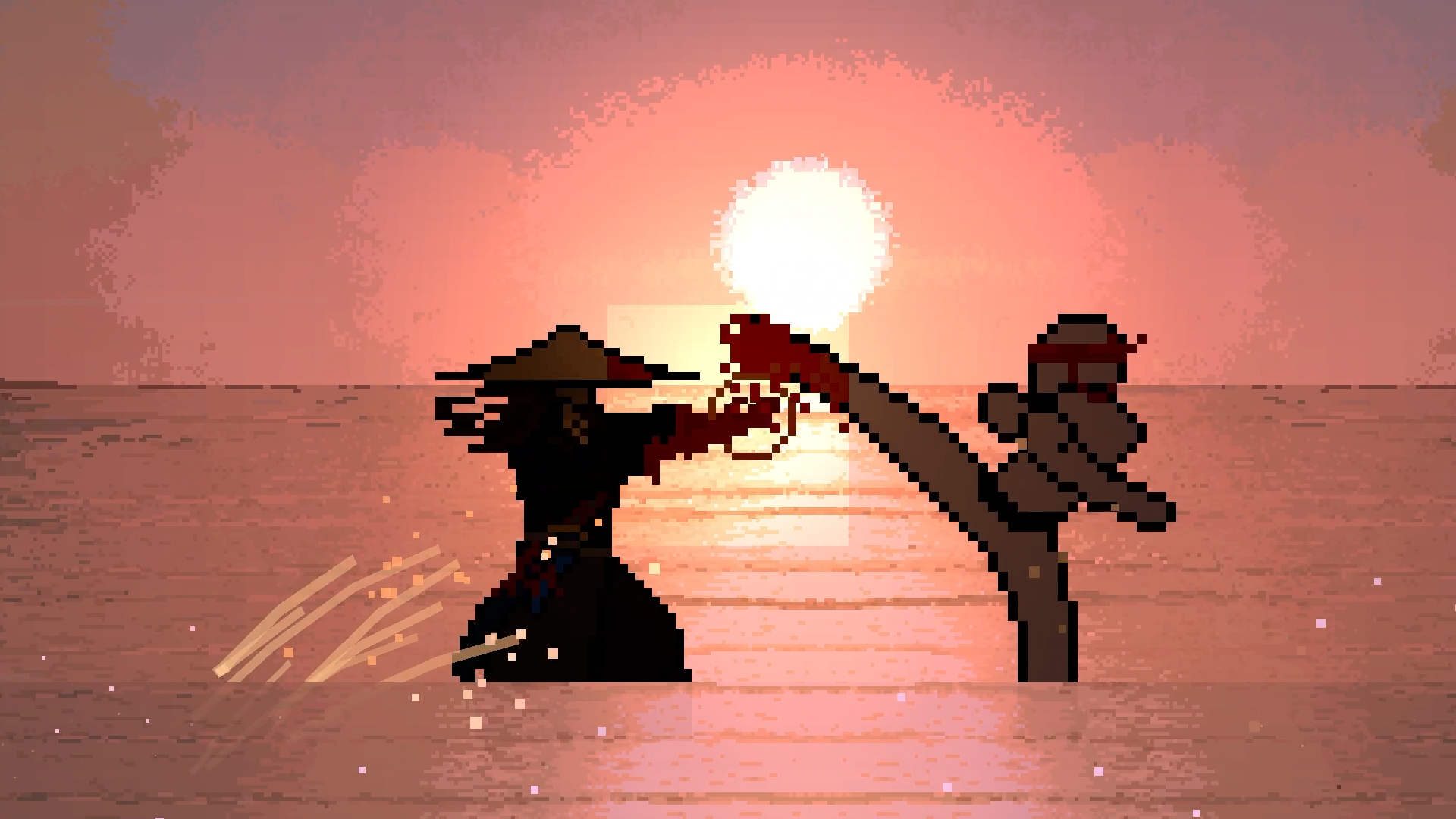
You can’t have a Musashi game without the site of his most famous duel against Kojiro Sasaki. Ganryu Island was the most painstakingly drawn stage in the game.
Artistic Challenges
- The Sunrise: Inspired by the Samurai Trilogy films, the stage features a unique pink and orange sunrise palette.
- Hand-Drawn Waves: Unlike the snow particles, the waves on Ganryu Island were hand-animated to drift onto the sand.
- Interactive Water: The ocean in the foreground is slightly transparent, giving the illusion that the characters are dueling with their feet submerged in the tide.
Stage Development: Tall Grass
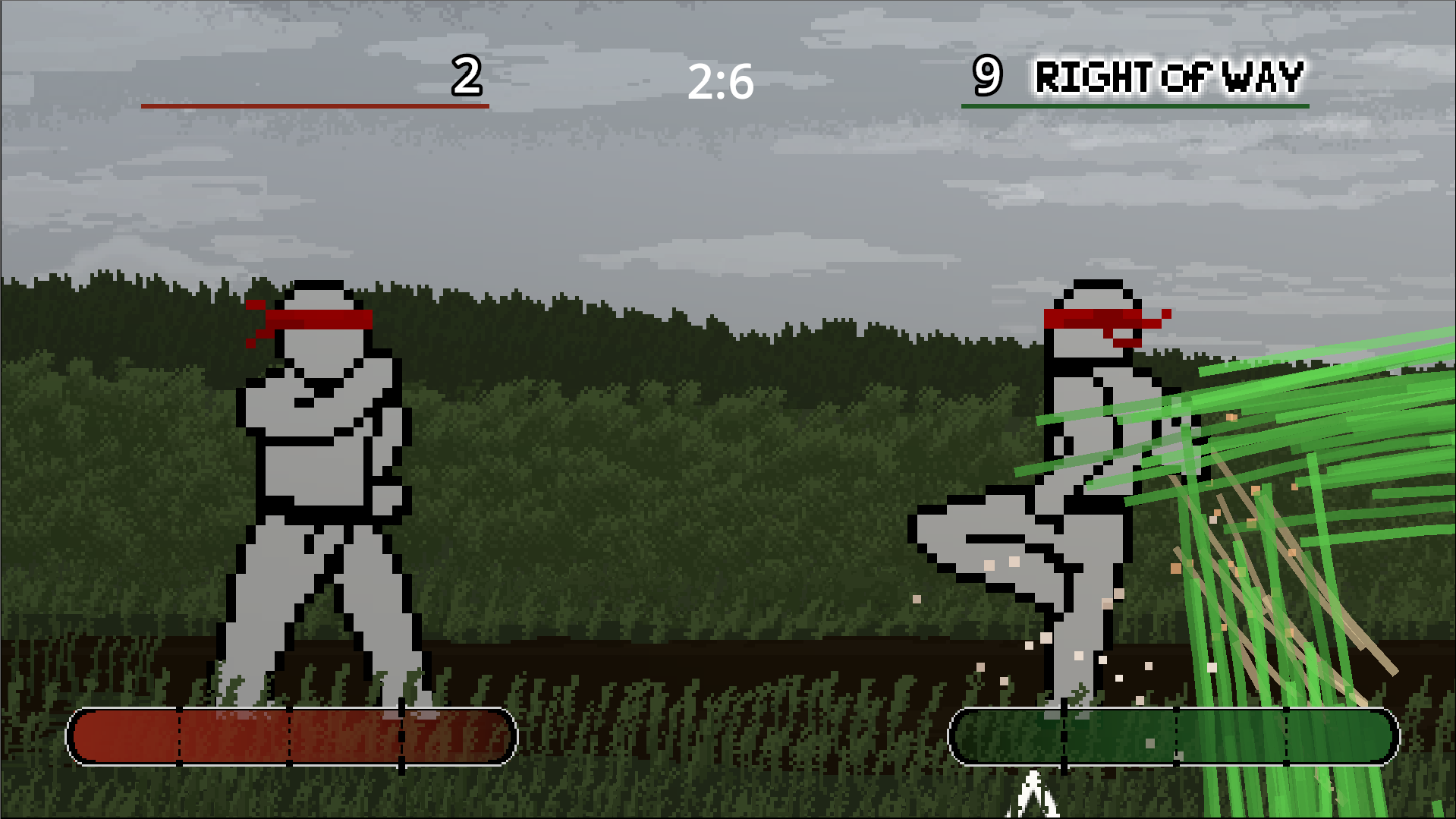
The Tall Grass stage is a complete overhaul of a project from a year ago. It draws heavy inspiration from the classic samurai film Harakiri.
Development Breakthroughs
- The Spray Paint Tool: After 700 hours in Aseprite, the discovery of the spray paint tool allowed for the organic, chaotic look of the grass.
- Atmospheric Wind: To mimic the tension of a cinematic standoff, wind particles and swaying grass animations were added to create constant motion.
- Scale: The towers in the background were redrawn at a much larger scale to emphasize the isolation of the clearing.
Cinema in Pixels: The Samurai Movie Influence
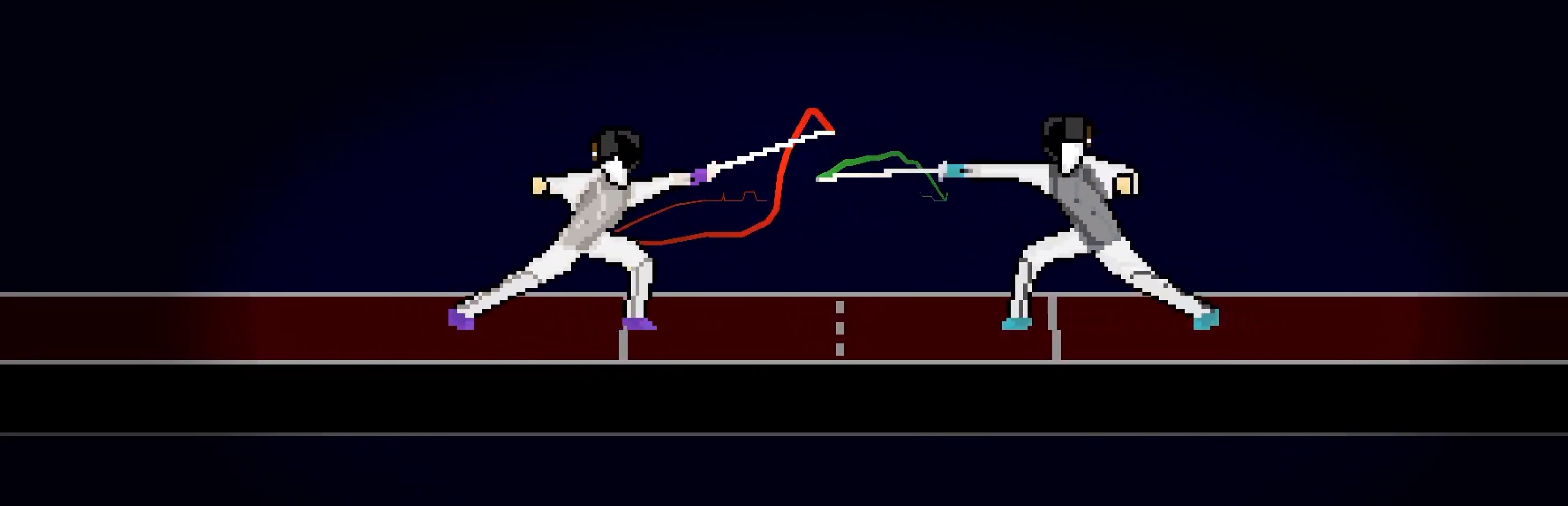
Right of Way began as a fencing simulator, but it has evolved into a tribute to 1950s and 60s Japanese cinema.
The Kurosawa Aesthetic
References to films like Seven Samurai, Yojimbo, and Sanjuro permeate the game. The “one-hit-to-win” mechanic isn’t just a gameplay choice; it’s an attempt to capture the “one-hit kill” tension found in the climactic duels of Toshiro Mifune’s filmography.
Bridging Fencing and Bushido
As a fencer and a fan of samurai media, the developer noted the striking similarities between the two:
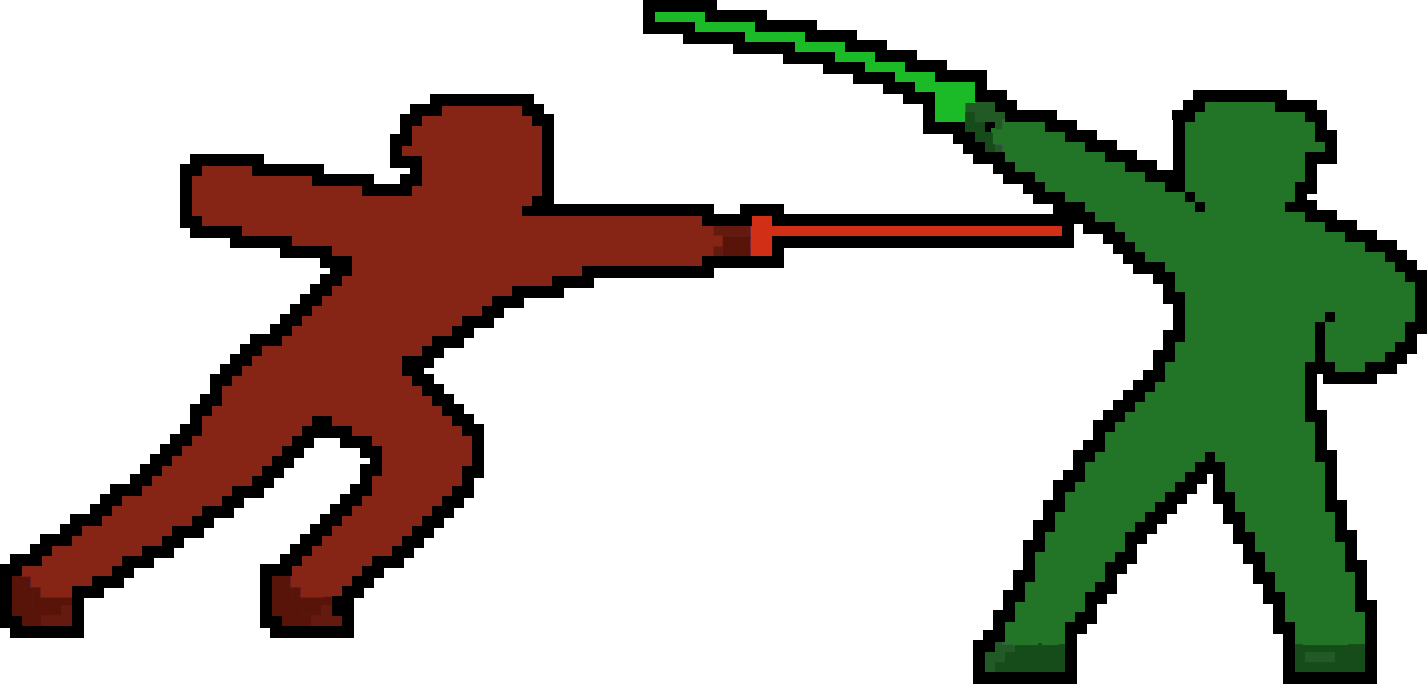
- The Touch: In fencing, a single touch scores.
- The Mistake: In a samurai duel, one wrong step is fatal.
This synergy creates a fighting game where the emphasis is not on practicing 50-hit combos in training mode, but on those quiet, intense moments where both players are within reach, and the first person to flinch loses everything.