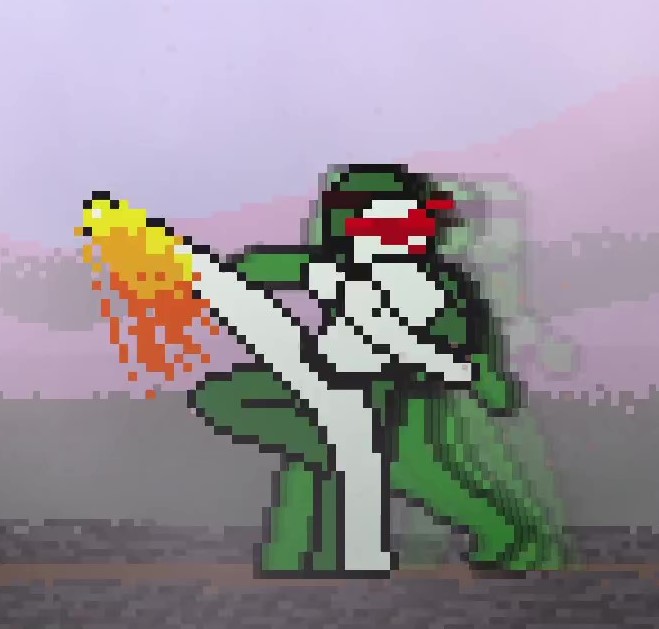
Body Trails - A Visual Aesthetic
Colored visual effect that trails delayed

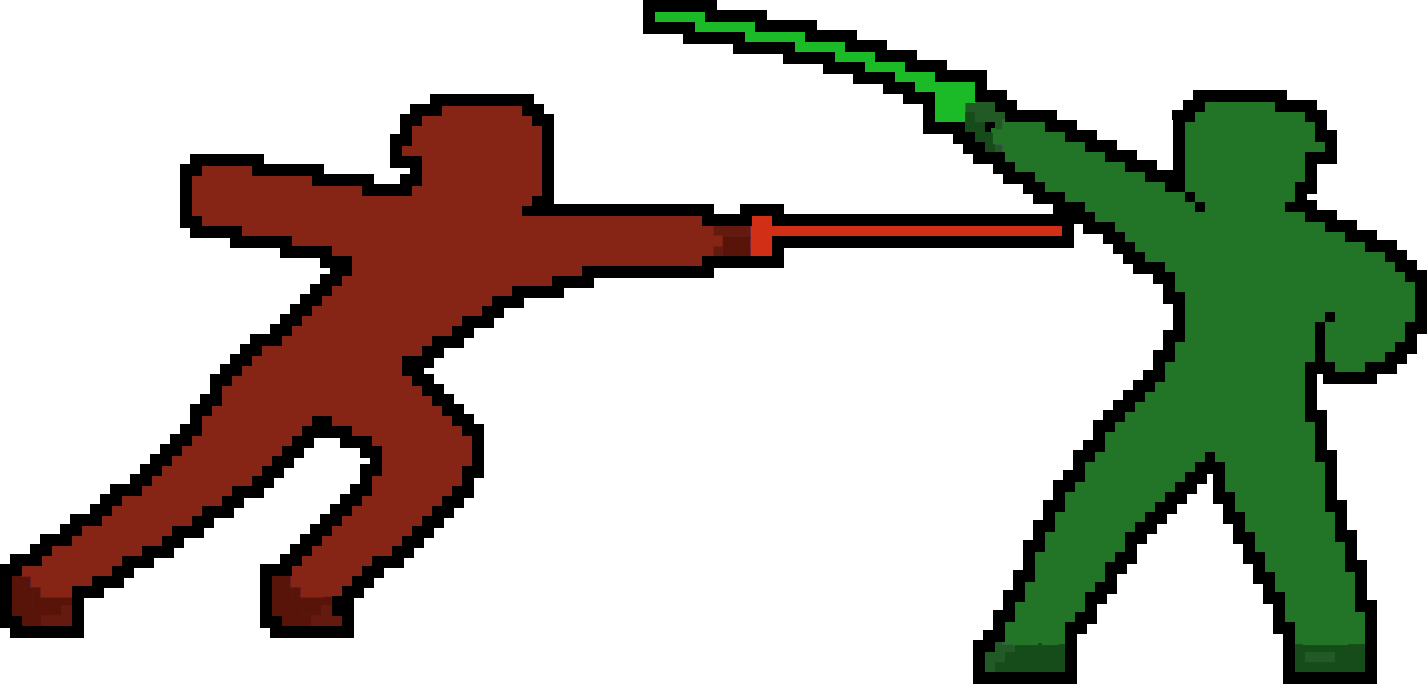
How were the aesthetics of Right of Way shaped over time?
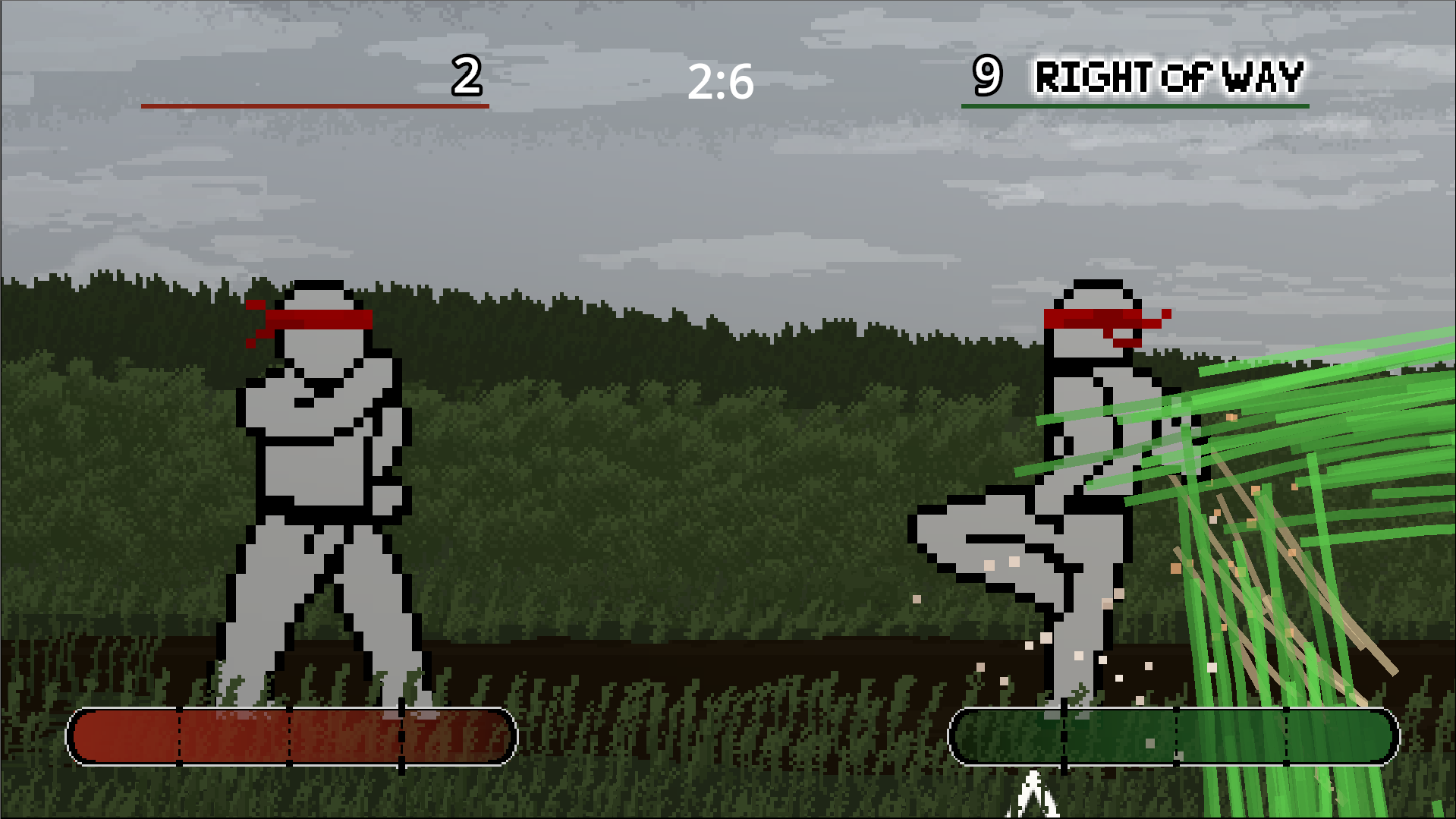
Here are all the indicators at once–the overhead arrow, visible bar of meter, and body trails:
While the right of way arrow at the top was a great addition, I do not expect players to look over the combat and watch the arrow slowly transition. The player should focus on the fencing in-front of them–but, if they do not understand the right of way rule fully, they still need a visual guide. Which became the body trail.
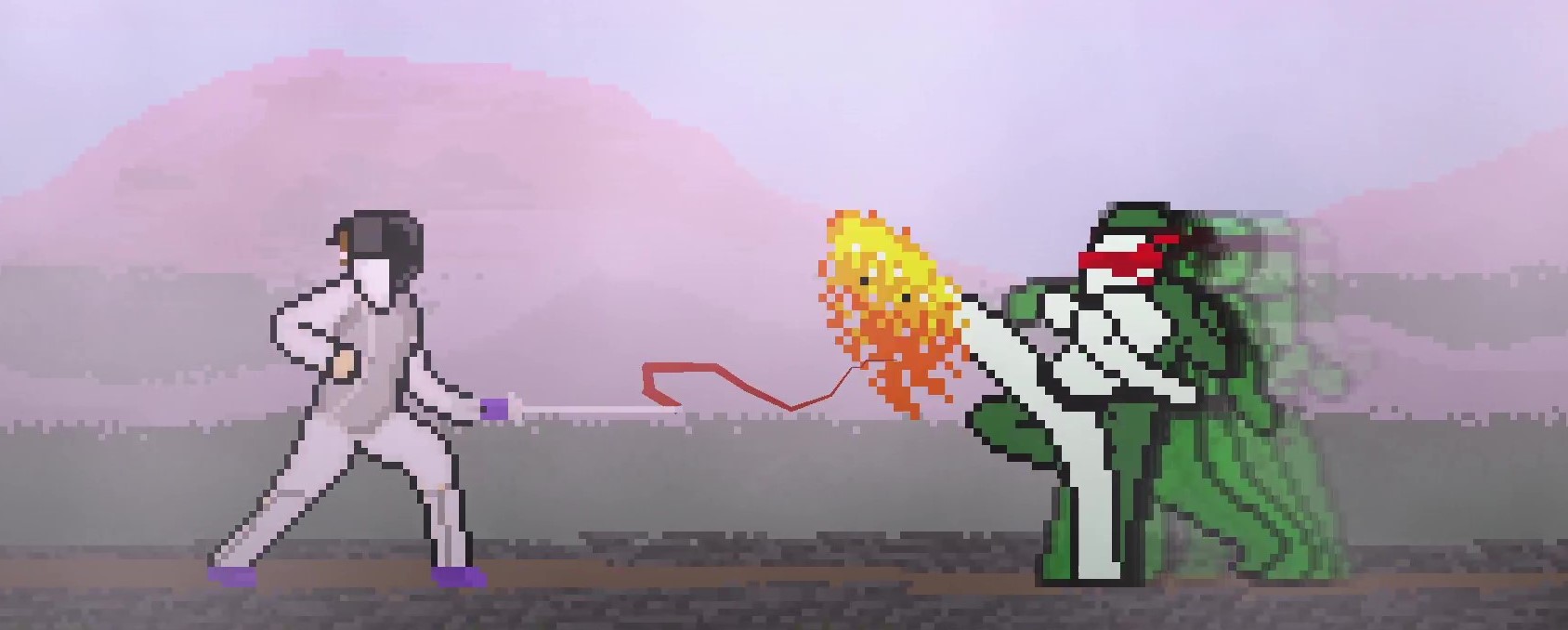
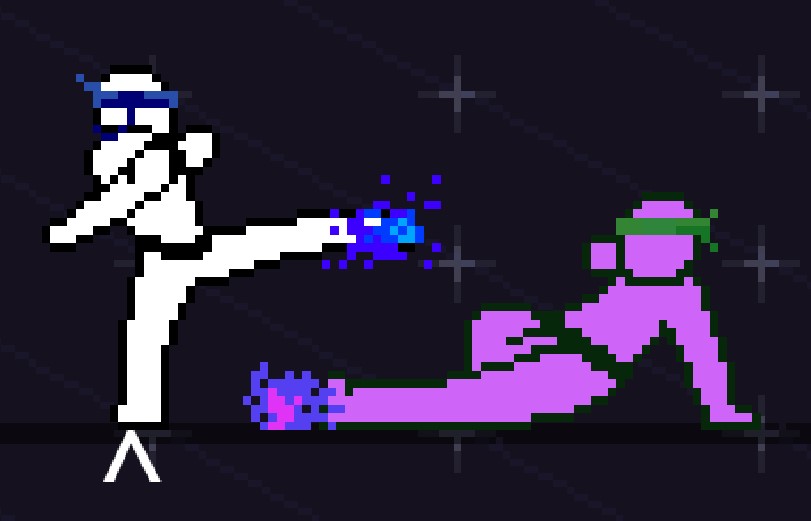
As the player moves, duplicates of their sprite follow. Well, only the player possessing right of way has this trail; this acts as a visual indicator of who has priority.
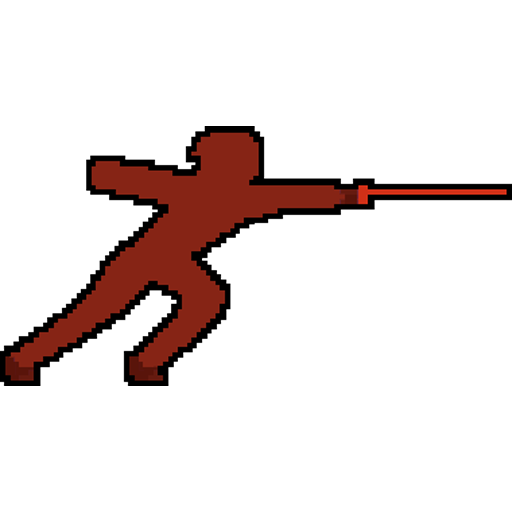
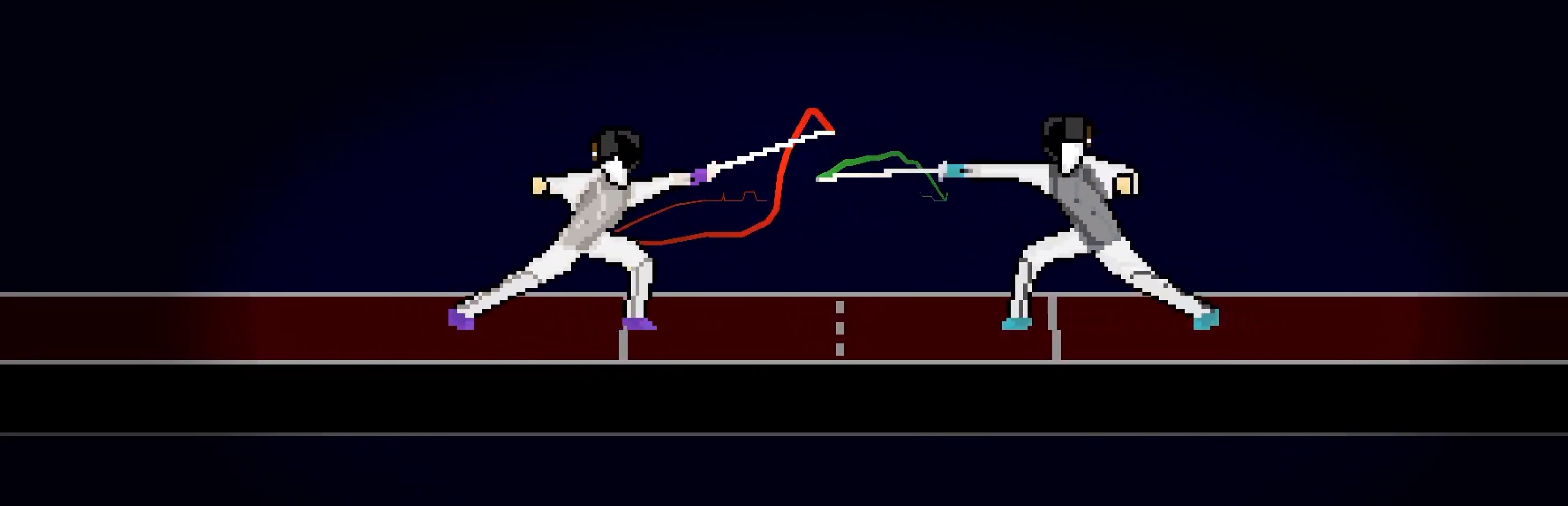 As the Foilist’s blade moves, a trail of red/green (depending on being player 1 or player 2) follows the tip. This improves tracking, helping players comprehend the movement of the blade and whether attacks landed; large or multi-hitting attacks may be poorly telegraphed and/or explosive, so the trail guides the viewer’s interpretation.
The trail system from before provided much of the logic for the body trail script. However, the key differences are:
| Blade Trail | Body Trail |
|---|---|
| Both players | Whoever has right of way |
| Instantaneous | Delayed |
| Follows the tip of the blade | Follows the entire sprite (even as it animates) |
| Detects the best position via an algorithm | Detects appearance via the character Sprite2D’s variables |
| Color changes over a gradient | Color is hard-set (but blends into transparency) |
| Many invisible points | Many faded sprites |
SF3 inspires the art and gameplay of Right of Way. Unforutnately, it is near-impossible for me to replicate SF3’s beautiful sprite work. Even so, many of my animations pay homage to the fighting game I grew up playing.
Some of the beautiful art from Street Fighter 3:
.gif)
.gif)
.gif)
.gif)
.gif)
.gif)
.gif)
.gif)
.gif)
.gif)
.gif)
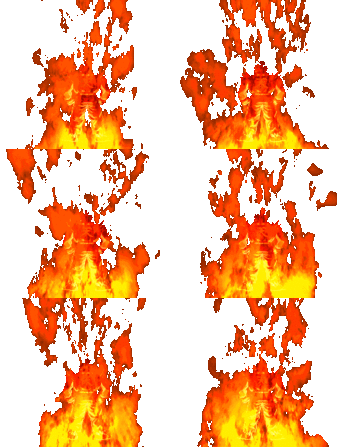
Makoto’s sprite work stands out in a game of gorgeous art. She feels amazing to play–despite her unorthodox control scheme–due to how her animations flow into one another. Some examples:
.gif)
.gif)
.gif)
.gif)
.gif)
.gif)
.gif)
.gif) The smears, stretches, pauses… wow.
The smears, stretches, pauses… wow.
.gif)
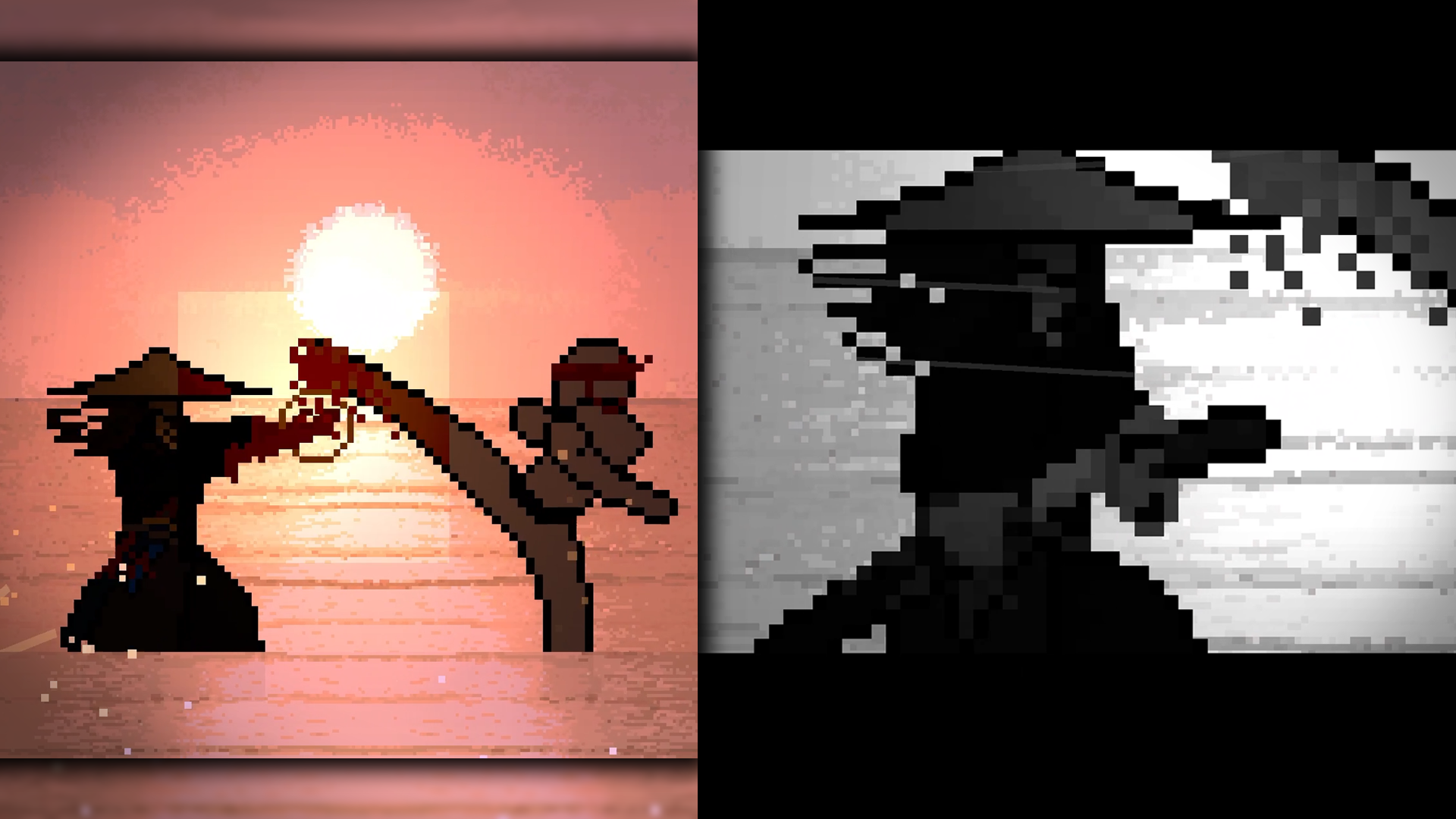
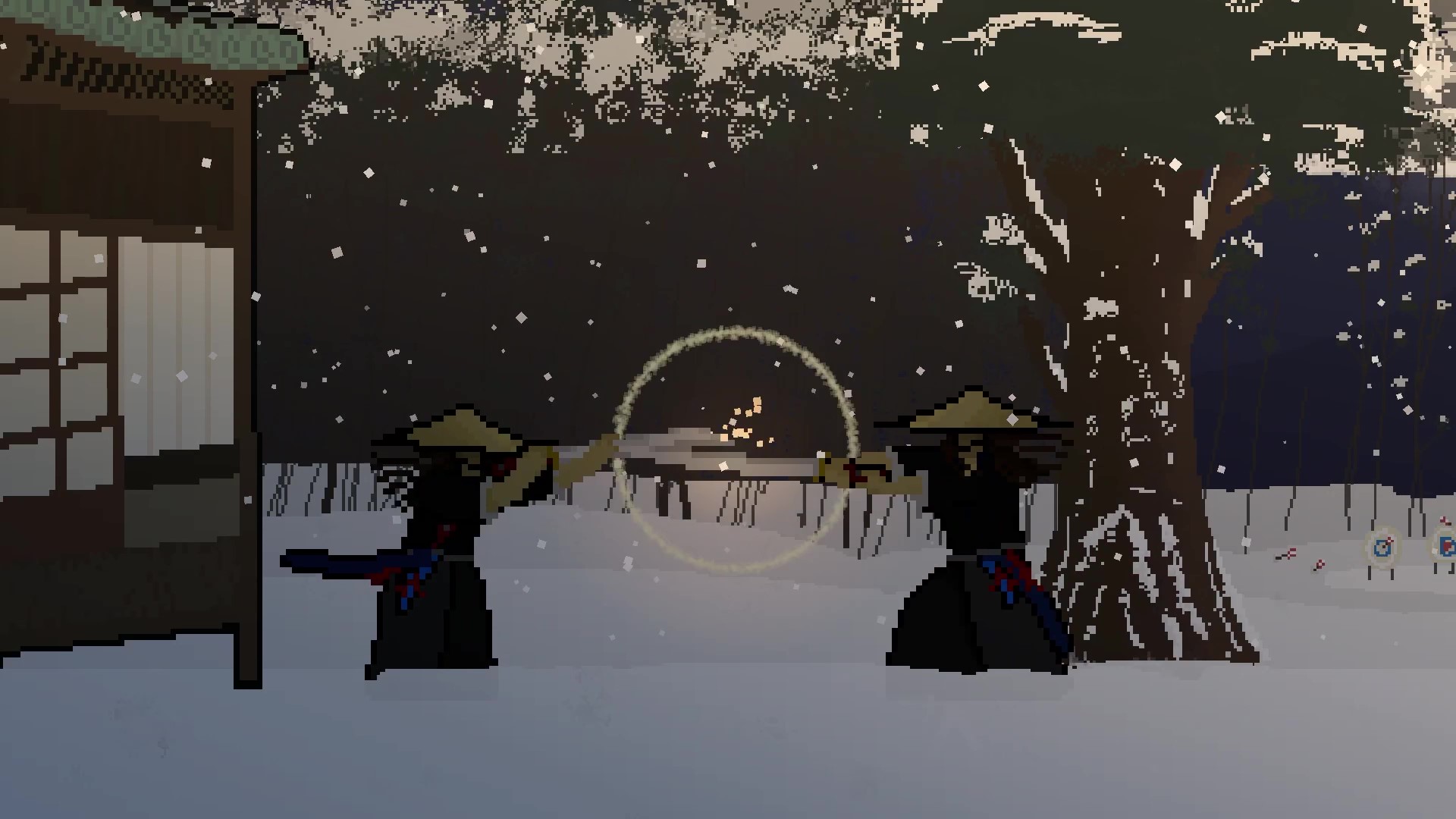
Right of Way began as a fencing simulator, but it also evolved into a tribute to 1950s and 60s Japanese cinema.
References to films like Seven Samurai, Yojimbo, and Sanjuro permeate the game. The “one-hit-to-win” mechanic isn’t just a gameplay choice; it’s an attempt to capture the “one-hit kill” tension found in the climactic duels of Toshiro Mifune’s filmography.
As a fencer and a fan of samurai media, the developer noted the striking similarities between the two:
This synergy creates a fighting game where the emphasis is not on practicing 50-hit combos in training mode, but on those quiet, intense moments where both players are within reach, and the first person to flinch loses everything. This appeals most to lovers of “footsies” and playing neutral in fighting games.
Right of Way needed a visual upgrade.
One of the new visuals is the trails tracking algorithm.
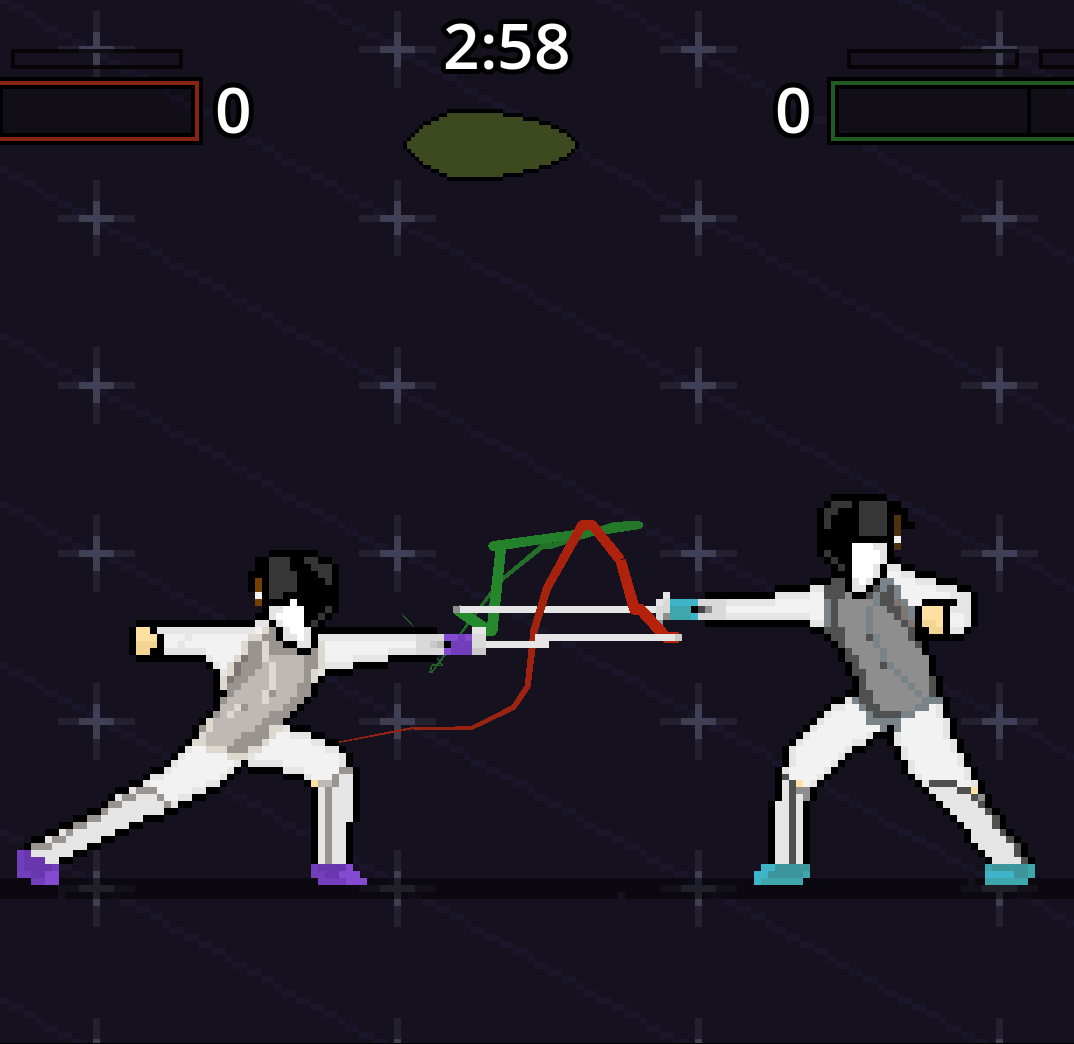 As the Foilist’s blade moves, a trail of red/green (depending on being player 1 or player 2) follows the tip. This improves tracking, helping players comprehend the movement of the blade and whether attacks landed; large or multi-hitting attacks may be poorly telegraphed and/or explosive, so the trail guides the viewer’s interpretation.
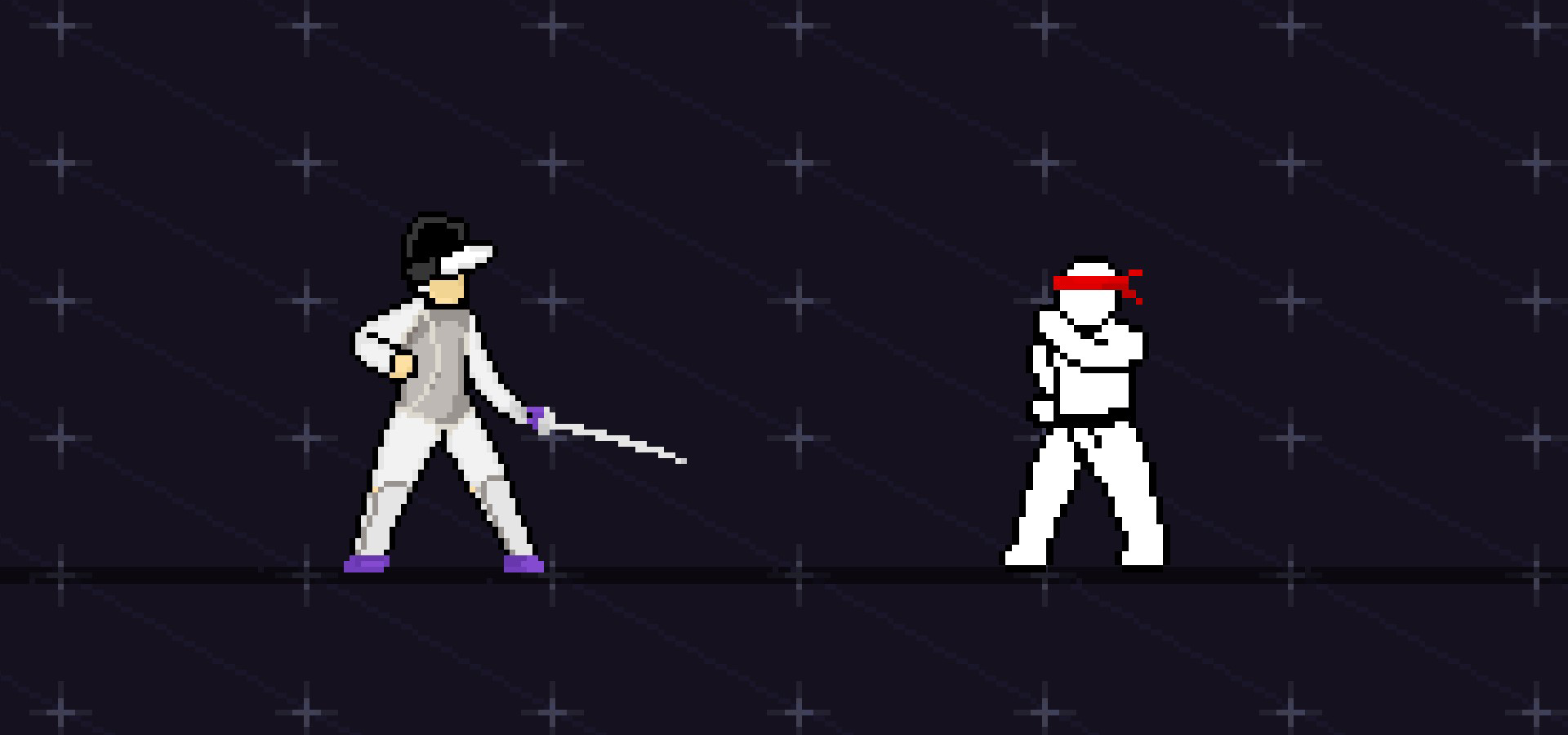
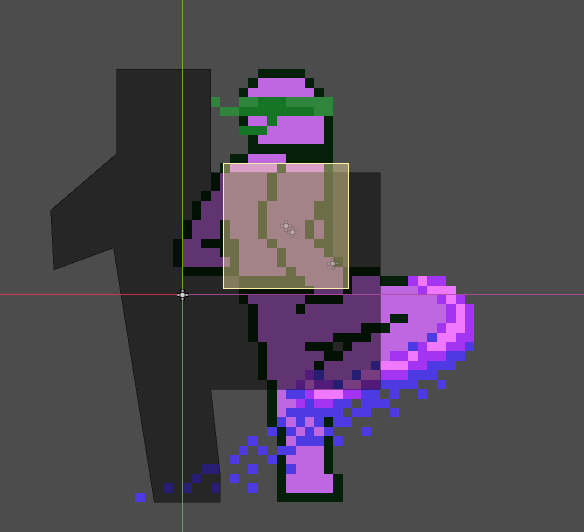
Colored visual effect that trails delayed
The coolest visual feature ever
How the rule of priority was programmed